By Richie MacTaggart, Head of PR & Marketing, 21X
If you’ve read anything about tokenized markets, you’ve probably seen the words “digital wallet” thrown around as though everyone already knows what it means. Many people working in the traditional finance (TradFi) world in particular don’t, and there’s no reason they should. For decades, owning a share or a bond meant holding a contractual claim with a broker, not a thing you could point to. Digital wallets change that relationship completely and understanding them is now essential to understanding where capital markets are heading in the inexorable march from TradFi to defi (decentralized finance).
This guide is written for readers with limited background knowledge of the subject. It breaks the topic into its component parts, explains the jargon in plain terms, and finishes with a look at why wallet infrastructure, alongside custody and smart contracts, is becoming the foundation of a faster, safer financial system.
What is a digital wallet?
A wallet is not a purse. It doesn’t actually hold your assets. Instead, it manages a pair of cryptographic keys that prove and control ownership of tokens recorded on a blockchain. The tokens themselves live in a smart contract, a piece of self-executing code that acts as the official register of who owns what. Think of the wallet as the key to a safe deposit box, while the blockchain is the vault’s ledger of every box and its contents.
The two keys that matter
Every wallet is built around two keys. The public key works like a digital IBAN. You can share it freely so that others know where to send assets. The private key is your signature, the one piece of information that authorizes a transfer. Whoever holds the private key controls the assets, which is why losing it is unforgiving. There’s no customer service line to call for a forgotten password, and no bank to reverse a mistaken transfer. That single fact explains almost everything about how the industry has been built since.
Who guards the keys: custody and MPC
Because a lost or stolen private key means lost assets, institutions rarely hold keys themselves. They use professional custody providers instead, and this part of the market is growing fast. Regulatory change has helped: the US Securities and Exchange Commission rescinded its restrictive SAB 121 accounting rule in January 2025 and replaced it with SAB 122, removing a major barrier that had stopped banks from offering crypto custody on ordinary terms. The scale on offer is already enormous. BNY Mellon alone reported $59.4 trillion in assets under custody as of March 2026, a figure that shows how much of the traditional custody industry could migrate toward digital assets as rules continue to clarify. Meanwhile Coinbase Prime already custodies the underlying assets for more than 80 percent of US spot Bitcoin and Ethereum ETFs – evidence that regulated custody is already load-bearing infrastructure rather than a niche service.
The technology behind this is multi-party computation, or MPC. Rather than storing a private key as a whole in one place, MPC splits it into shards distributed across separate, isolated locations. A transaction only goes through when enough shards agree to sign it, so no single person, device or server ever holds a complete, exploitable key.
Policy engines: compliance built into code
Traditional finance relies on manual four-eyes checks to enforce internal controls. Wallet infrastructure can bake those rules directly into the code through a policy engine, automatically requiring senior sign-off above a value threshold, restricting transfers to approved counterparties, or limiting activity to certain hours. Governance stops being a process people follow and becomes a property of the system itself.
Two functions, not one
A wallet performs two different functions at the same time, and it’s worth understanding each of them separately. The first is the safe deposit box key: The cryptographic proof that establishes and controls ownership, exactly as described above. The second is the interface to the blockchain: the software layer through which a user connects to applications, submits instructions, and interacts with smart contracts.
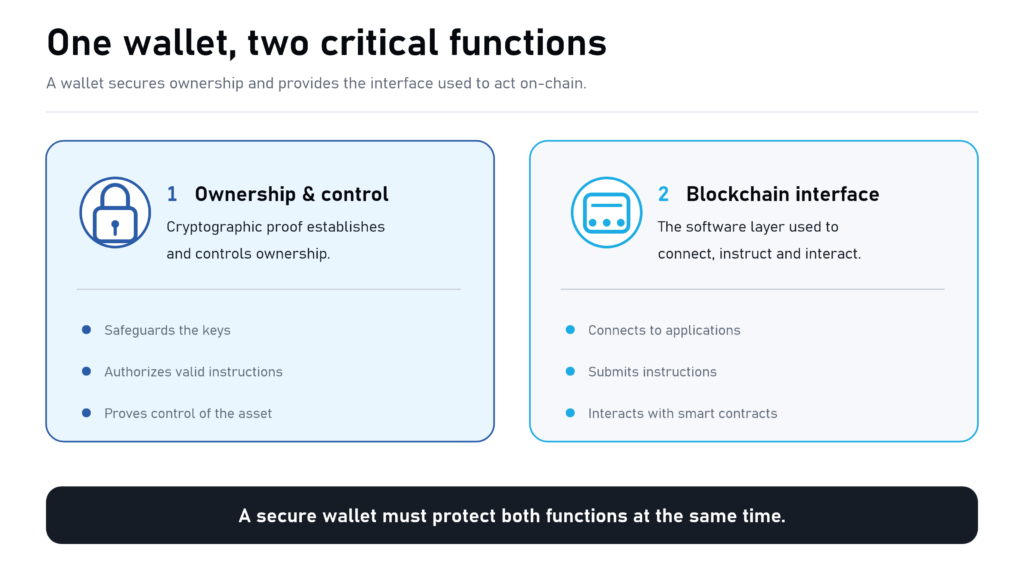
Fig 1: One wallet, two critical functions, by 21X
Wallet solutions must secure both functions at the same time. Most retail apps blend them into one screen for ease of use. Regulated infrastructure usually separates them deliberately. A custody provider might guard the keys through MPC, while distinct interfaces handle connections to trading venues, order books, settlement contracts and access to the respective functionalities. That split is what lets an institution outsource the vault (custody) while keeping a controlled, policy-governed door (the interface) for specific access to functionality and decentralized financial applications.
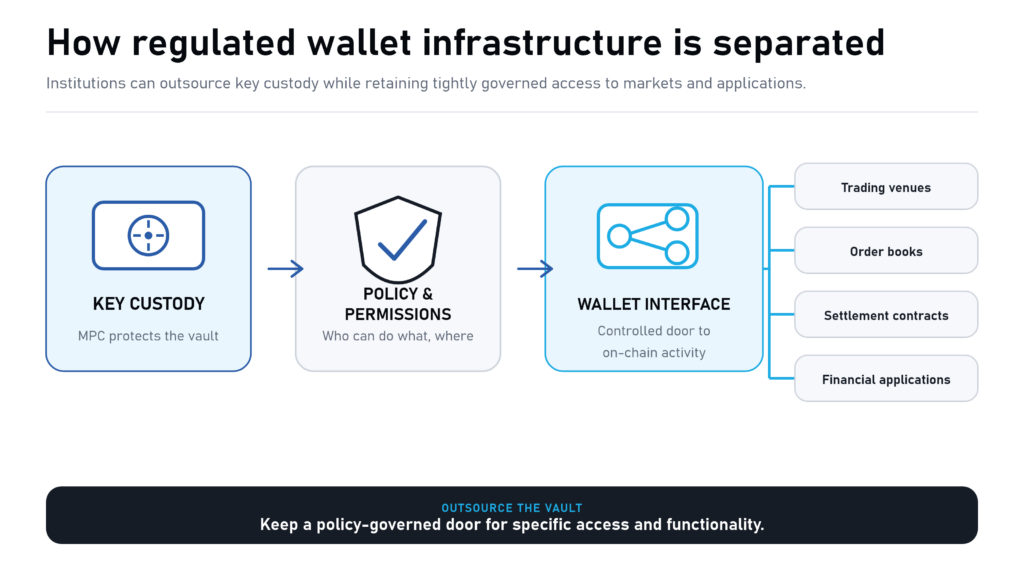
Fig 2: How regulated wallet infrastructure is separated by 21X
Why this matters: wallets and the future of trading
The reason wallets deserve this much attention is settlement. In conventional markets, a trade and its settlement are two separate events, typically two business days apart under the T+2 cycle still used across the EU, where more than €4 trillion of securities settle through central securities depositories every single day. That gap creates counterparty risk, and it’s why the EU, UK and Switzerland are now moving to a faster T+1 cycle by October 2027, following the US, Canada and Mexico’s own transition in May 2024.
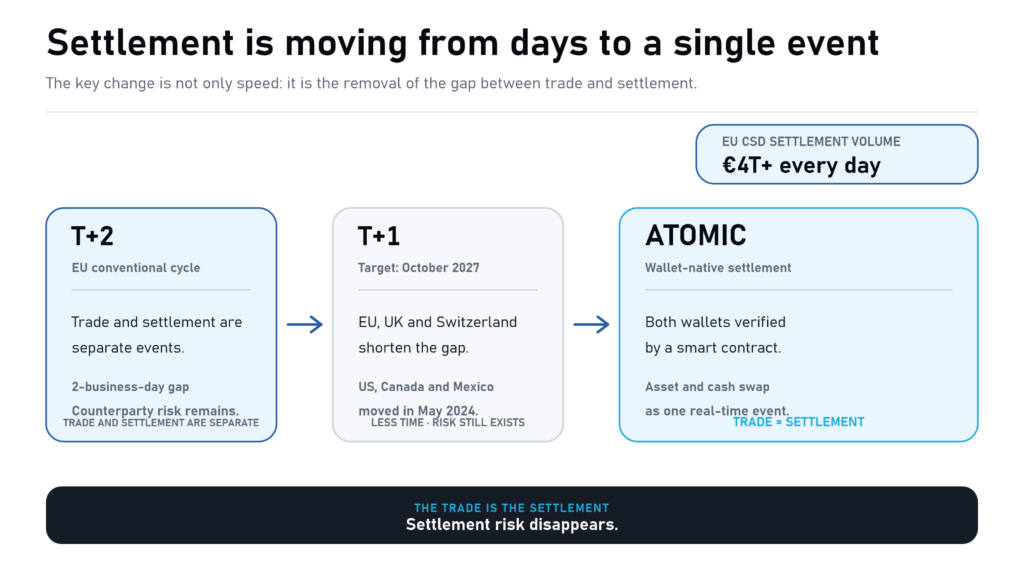
Fig 3: Settlement is moving from days to a single event by 21X
Wallet-native infrastructure goes further still. When both wallets in a trade are verified by a smart contract in real time, the swap of asset and cash happens as a single, atomic event. Settlement risk doesn’t shrink – it disappears. That’s because the trade is the settlement.
This is one reason why forecasts for tokenized markets look so ambitious. Citi’s research puts the current tokenized asset market at roughly $17 billion today, but projects a base case of $5.5 trillion by 2030, with a bull case of $8.2 trillion, driven by major infrastructure providers such as DTCC, NYSE and Nasdaq building tokenization directly into core trading systems. Estimates vary widely across banks and consultancies, a reminder that this is still an emerging field, but the direction of travel is consistent: wallets, custody and smart contracts together are becoming the plumbing for a very large share of future capital markets activity.
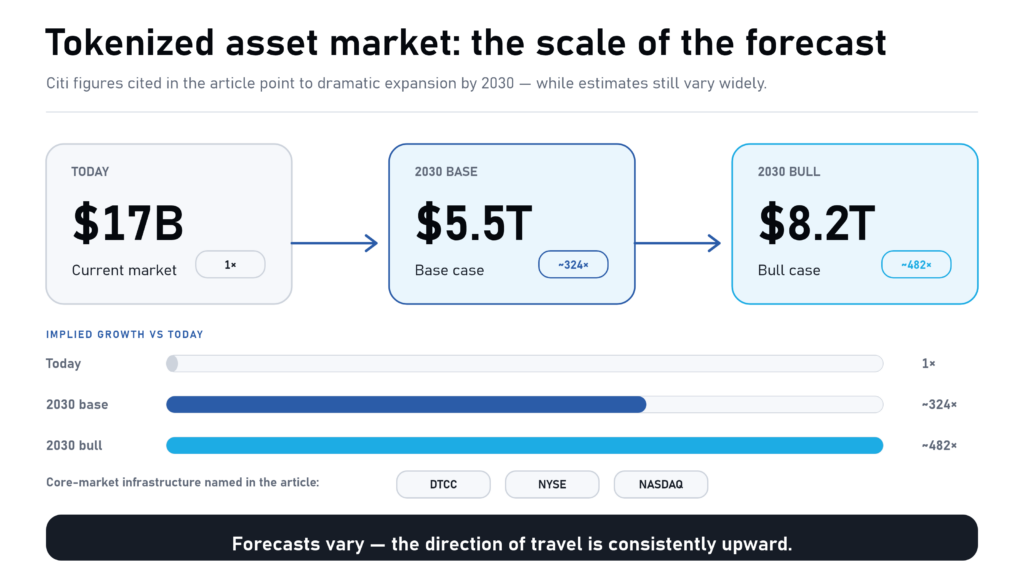
Fig 4: Tokenized asset market: the scale of the forecast by 21X
Regulation: not the wild west
A wallet-based model can sound like it belongs to an unregulated, permissionless world. On properly regulated venues, the opposite is true. Every wallet must first pass know-your-customer and anti-money-laundering checks before it can be whitelisted to trade at all. 21X, Europe’s first fully regulated DLT trading and settlement system under BaFin and ESMA supervision, is built entirely on this principle: institutional-grade custody, policy-driven governance and strict whitelisting, combined with the speed and finality of atomic settlement.
The takeaway
A wallet is simple in concept: a pair of keys controlling ownership recorded on a blockchain. But layered with professional custody, MPC security, policy engines and smart contracts, it becomes something much bigger, the infrastructure replacing decades of fragmented back-office process with a single, instant, regulated event. Understanding wallets is no longer a niche technical interest. It’s the starting point for understanding where trading is going next.
– end –