Why the next phase of financial marketing will be defined by data, personalization, governance and trust
– By Maximillian Hartmann, Senior Marketing Manager, 21X –
Finance marketing sits under different rules to most other sectors. In consumer goods, a vague message just weakens a campaign. In financial services, it can become a compliance issue, a reputational risk, or a source of real harm to a customer. Banks, asset managers, insurers, fintechs and wealth platforms aren’t just selling products when they market. They’re influencing decisions about savings, credit, risk, retirement and investment.
That’s why I think the debate about AI in finance marketing needs to move past content creation. Generative AI has made it much easier to draft articles, emails, social posts, product explainers and campaign variations. But the bigger shift is structural. AI is starting to change how marketing decisions get made in the first place.
The real opportunity isn’t just faster content. It’s smarter marketing infrastructure: AI that supports audience understanding, message testing, content workflows, budget allocation and performance measurement with more precision than before. Marketing is moving from periodic campaigns towards something closer to a controlled system: one that learns, tests and responds continuously within clear governance boundaries.
For financial institutions, this opens up a new path – moving from basic content production to accountable growth.
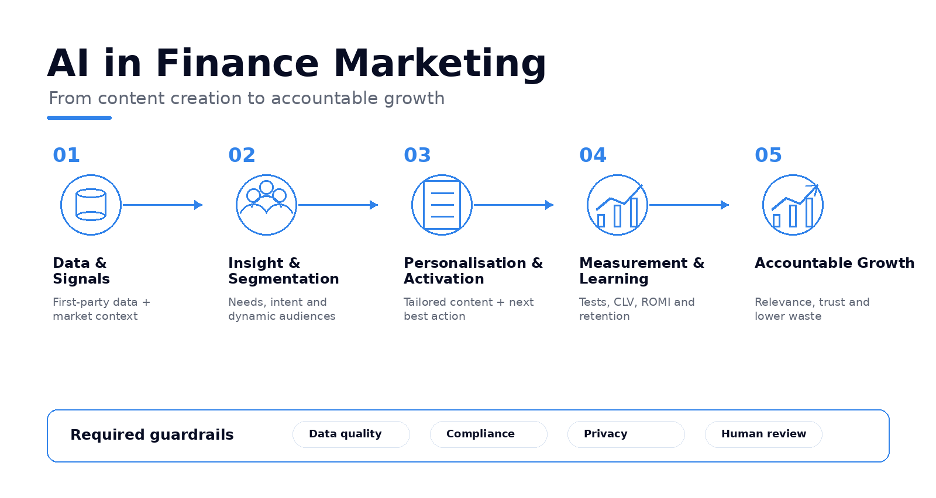 Figure 1: AI-powered finance marketing connects data, segmentation, activation and measurement – with guardrails built in.
Why finance marketing is different
Financial communication depends on trust. Every message has to balance commercial relevance with accuracy, suitability and responsibility. I wouldn’t treat a campaign for an investment product the way I’d treat one for a consumer subscription, and a personalized loan offer isn’t the same as a personalized shoe recommendation. A pension, mortgage, ETF, insurance product or wealth service can shape someone’s life for years.
That’s what makes AI both powerful and sensitive here. Human teams used to decide what to market, to whom, and how. Now data, machine learning and automated decision systems increasingly shape those calls. Feed a model customer data and a business objective, and it finds patterns, then applies them to new cases. That can sharpen relevance and efficiency, but poor data, unclear aims or weak governance can scale mistakes just as quickly.
In finance, personalization is never just personalization. It’s a decision about who gets which message, which product gets shown, which customer gets prioritized, and which risk I’m willing to accept on their behalf.
From content factory to marketing intelligence
Most firms still use AI mainly to draft: writing copy, summarizing research, translating content, producing campaign variations. Useful, but it’s only the entry point.
The more strategic model is an AI-powered marketing system, one that connects data, customer insight, audience strategy, media activation, creative production, testing and measurement. Here, AI doesn’t replace marketing strategy. It extends what the organization can understand, how fast it can act, and how much it learns from what happens next.
A finance brand could use AI to spot customer segments from real behavior rather than static demographics. It could test which educational messages help customers understand a product without overstating its benefits. It could shift media spend based on predicted outcomes instead of a fixed annual plan. And it could get product, sales, compliance and marketing teams working with the same picture of the customer.
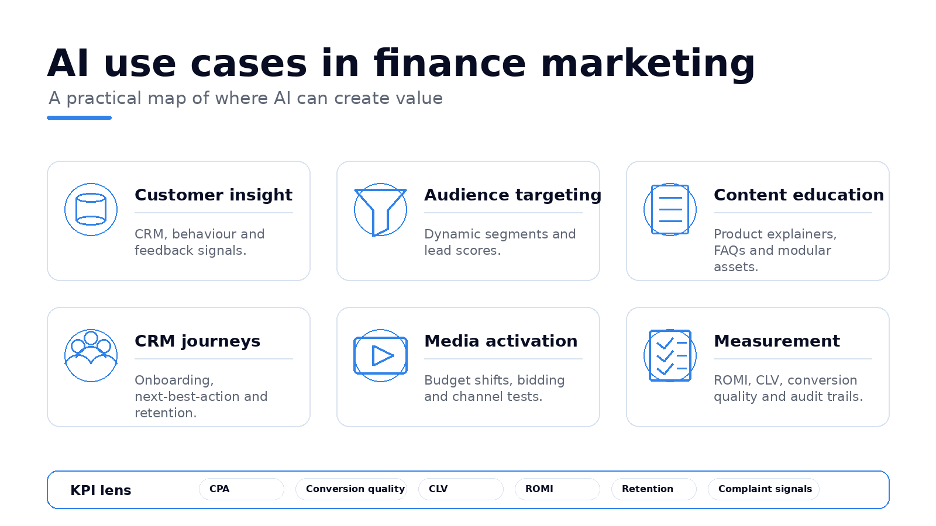
Figure 2: The most relevant AI use cases in finance marketing, from customer insight to measurement and governance.
Where AI actually creates value
I’d put this in five areas, and they build on each other. Better data sharpens insight, better insight sharpens targeting, better targeting improves relevance, and better measurement improves the next decision.
Insight. AI can work through approved marketing inputs such as campaign results, content performance, surveys, website behavior, customer feedback and sales or service insights where permitted. Used responsibly, it can help surface needs and friction points earlier than a person could, without relying on sensitive data or unrestricted profiling.
Segmentation. Traditional segmentation leans on broad categories: age, income, geography, investor type. AI can build segments around behavior, intent, product need, predicted response, and who should be excluded.
Personalization. AI can adapt content, channel, timing and level of detail. In finance, that shouldn’t mean pushing products harder. It should mean more relevance, better education, more clarity. The best use of personalization isn’t to catch someone at a vulnerable moment. It’s to help them understand what actually matters to their situation.
Activation. AI can support lead scoring, decide the next best action, help with media bidding, test creative and coordinate campaigns. Instead of launching one big campaign and waiting weeks for results, teams can conduct smaller experiments and adjust as evidence comes in.
Measurement. Clicks and impressions still matter, but they’re not enough on their own. Finance marketing increasingly needs to connect activity to cost per acquisition, conversion quality, lifetime value, retention, cross-sell potential, return on marketing spend and brand trust.
The risk that comes with it
The same capabilities that make AI attractive also make it risky. AI can infer patterns no human team would consciously sign off on. It might notice that certain life events, signs of financial stress or behavioral patterns correlate with higher conversion. Without clear ethical boundaries, that insight could end up targeting people at their most vulnerable.
Data quality is the other big issue. Incomplete, outdated or siloed customer records mean AI-driven targeting can go wrong: a customer sees an offer they’re not suitable for, a declined applicant keeps seeing ads for the same product, or a model quietly reproduces historic bias baked into its training data.
Privacy sits at the center of all this. More data can sharpen predictions, but customer data isn’t an unlimited resource. Customers need to understand how it’s used, and firms need clear lines around consent, data minimization and model transparency. The question for finance marketing to consider isn’t whether we can we target certain customers, it’s whether we ought to do so.
This is also why expertise still matters. AI can accelerate the work, but it can’t be accountable for the content. It can draft a product explainer, but it doesn’t understand regulatory nuance. It can propose a segment, but it doesn’t know whether the targeting logic is ethical. It can optimize for conversion, but it doesn’t know whether that conversion is actually good for the customer. Marketers need to understand the products, the audience and the regulation. Compliance needs to understand how AI shapes messaging and targeting. Data teams need to understand the business context behind their models. And leadership needs to define what responsible growth means before automation scales the wrong behavior.
The systems that matter most in finance marketing might not be the ones writing the copy. They’re the ones deciding which audience to target, which offers to prioritize, which message to test, which budget to shift, and which risk to escalate
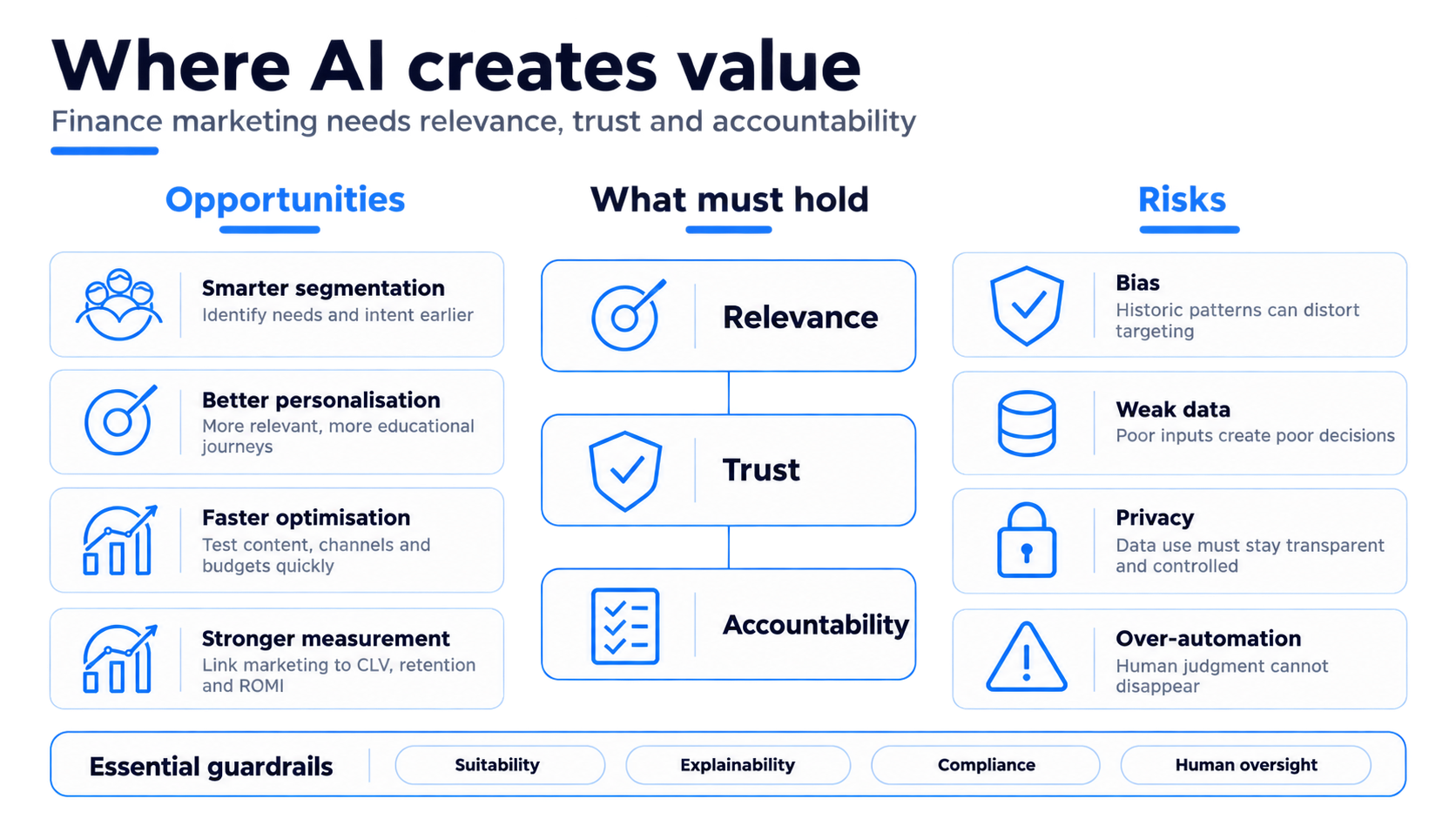
What a responsible AI workflow looks like
A good workflow starts before AI gets involved. First, define the use case, education, retention, acquisition, onboarding, cross-sell or service. Then the boundaries: what we can credibly say, what data we can use, which customers to exclude, and which claims need review.
Next, check the data. Is it accurate, current, permission, relevant? Are there gaps that could lead to the wrong customer being targeted? Are sensitive attributes creeping in, directly or indirectly?
Then apply AI inside a controlled environment. It can generate insight, propose segments, draft content, test variations, predict outcomes, but every output gets checked against product rules, brand standards, regulation and customer interest.
Human review comes next, and in finance that’s not a bottleneck, it’s part of the product. The final call on facts, suitability, claims, tone and targeting must sit with a person who’s accountable for it.
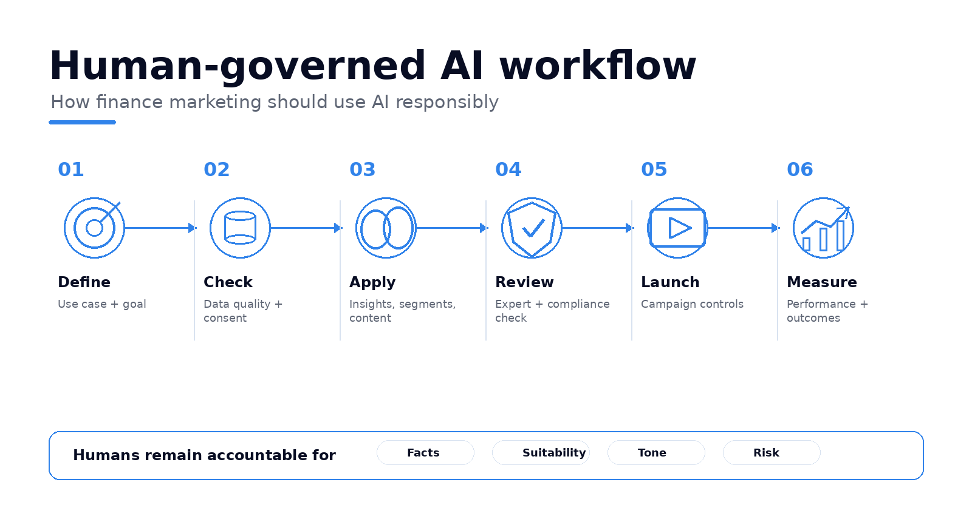 Figure 4: A human-governed workflow turns AI speed into accountable output.
Finally, measure performance and risk together. A campaign can do well commercially and still produce poor outcomes for customers. I’d want to see conversion quality, complaints, opt-outs, customer understanding, suitability checks and long-term relationship impact measured alongside the usual numbers.
The bottom line
AI won’t make finance marketing less human. Used well, it makes the human role more strategic, not less necessary.
The firms that win here won’t be the ones producing the most content. They’ll be the ones building marketing systems that connect data, insight, personalization, activation and measurement inside a genuinely responsible operating model.
AI can cut waste, sharpen relevance, speed up testing, improve customer education and open up new opportunities for growth. It can help financial brands communicate earlier, more clearly and more precisely. But in finance, growth only compounds when it’s built on trust.
The real advantage was never automation on its own. It’s accountable intelligence.
– end –