
Author: Anh Do Tuan, Senior Business Development Manager at 21X
Tokenized equities are often presented as a technology story – you put shares on a blockchain, allow them to move 24/7, and a new market will emerge. However, creating a token is not the same as creating a market. A market only works when a party is willing to stand on either side, show a bid and an offer, hold inventory and take the risk that comes with doing so.
Many people in the fintech space are asking the wrong questions. Liquidity providers don’t create markets and market makers don’t wake up one morning and decide they want to support tokenization because it’s an exciting technology. They deploy capital where they believe they can earn an attractive return. So, before asking who will make the market, we should probably ask something even more fundamental:
WHO ACTUALLY WANTS TO TRADE DTCC TOKENIZED EQUITIES AND WHAT PROBLEM DOES IT SOLVE FOR THEM?
Because if we can’t answer that, the liquidity discussion is almost irrelevant.
How do Market Makers Actually Think?
Putting it frankly, liquidity is expensive. Every bid and every offer represents someone putting capital at risk. A market maker has to finance inventory, manage overnight exposure, hedge positions, absorb adverse flow and earn enough spread to justify tying up balance sheets. So, if the economics don’t work, they simply won’t quote. It’s that simple.
The market makers don’t make decisions by asking whether blockchain is the future. Rather, they ask three questions:
-
Where does the revenue come from?
-
What risks are we taking?
-
How much capital does this consume?
Their decision-making equation looks something like this:
𝐸𝑥𝑝𝑒𝑐𝑡𝑒𝑑 𝑃𝑟𝑜𝑓𝑖𝑡=− 𝐴𝑑𝑣𝑒𝑟𝑠𝑒 𝑆𝑒𝑙𝑒𝑐𝑡𝑖𝑜𝑛−𝐻𝑒𝑑𝑔𝑖𝑛𝑔 𝐶𝑜𝑠𝑡𝑠−𝐼𝑛𝑣𝑒𝑛𝑡𝑜𝑟𝑦 𝑅𝑖𝑠𝑘−𝐶𝑎𝑝𝑖𝑡𝑎𝑙 𝐶𝑜𝑠𝑡𝑠−𝑂𝑝𝑠 𝐶𝑜𝑠𝑡𝑠
Everything they do is about maximizing this equation. And when considering new business opportunities, they apply another layer of analysis:
𝐼𝑛𝑐𝑟𝑒𝑚𝑒𝑛𝑡𝑎𝑙 𝑅𝑂𝐸=𝐼𝑛𝑐𝑟𝑒𝑚𝑒𝑛𝑡𝑎𝑙 𝑅𝑒𝑣𝑒𝑛𝑢𝑒−𝐼𝑛𝑐𝑟𝑒𝑚𝑒𝑛𝑡𝑎𝑙 𝐶𝑜𝑠𝑡−𝐼𝑛𝑐𝑟𝑒𝑚𝑒𝑛𝑡𝑎𝑙 𝐶𝑎𝑝𝑖𝑡𝑎𝑙
If incremental ROE is below their hurdle rate or negative, they simply won’t do it.
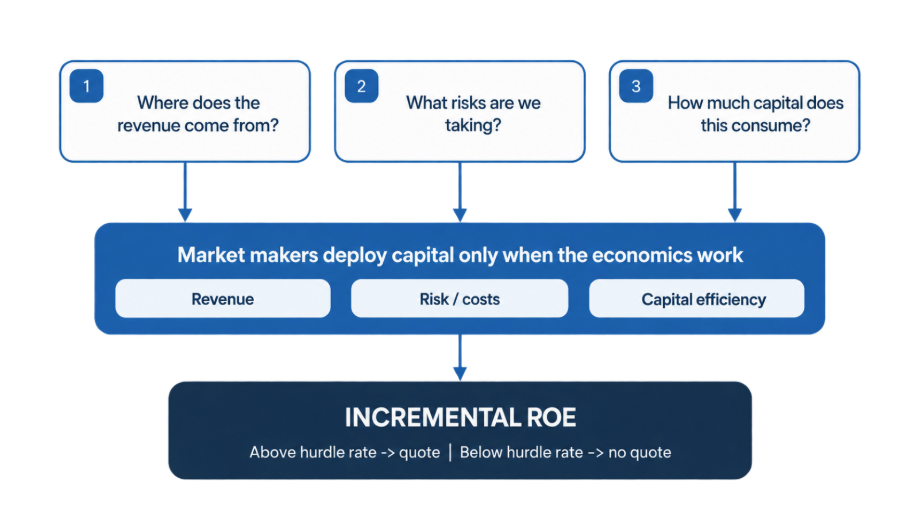
Fig. 1: Market-maker economics: revenue, risk, capital efficiency, and ROE.
So Where Does Revenue Come From?
This is where I think the industry is looking in the wrong place. Most discussions around tokenized real-world assets (RWAs) focus on the supply side. How do we attract issuers and market makers? How much liquidity incentive do we need? How do we bootstrap the order book?
These are valid but not the right first question to ask. The first question should be: where does the organic order flow come from? Because market makers don’t naturally create organic demand. They monetize demand.
If there is no natural reason for people to trade DTCC tokenized equities, then no amount of market maker incentives will create a healthy market in the long run. At best, you create artificial liquidity that disappears once the incentives stop.
The false assumption a lot of people make is that existing equity investors will naturally migrate to tokenized equities because it’s the future, or that blockchain tech is a more transparent, secure, and better system. I don’t think that’s where the first meaningful adoption comes from. If you’re a traditional long-only investor, today’s market already works extremely well. US equities already have some of the deepest liquidity in the world, incredibly tight spreads and highly efficient execution. For most institutional investors, buying Apple or Microsoft stock through today’s infrastructure isn’t really a problem that needs solving. That’s a difficult value proposition.
Instead, I think the first institutional users already exist today but they’re just trading something different. The earliest adopters for DTCC’s natively tokenized equities are professional traders trading tokenized real-world asset perpetuals. These aren’t just retail traders taking speculative positions. Many are quantitative trading firms, proprietary trading firms, arbitrage desks, crypto-native market makers, delta-neutral traders, or systematic hedge funds. They’re already comfortable operating entirely on-chain and they’re already trading equity risk.
Hyperliquid is probably the best company example. Its HIP-3 ecosystem has grown remarkably quickly. At the time of writing the platform had generated over $400 billion in cumulative volume across equities, commodities, indices and FX perpetual markets, with around $8 billion traded in a single day. Equities alone represented close to 70% of trading activity (source: HIP-3 Overview · hl.eco). On-chain metrics for HIP-3 market published by Hyperliquid show that there is already significant demand to trade traditional asset classes on-chain, driven by the global accessibility that blockchain infrastructure offers. That growing speculative activity from global users is, in turn, creating market inefficiencies and new opportunities for professional and institutional traders that facilitate organic demand and volumes.
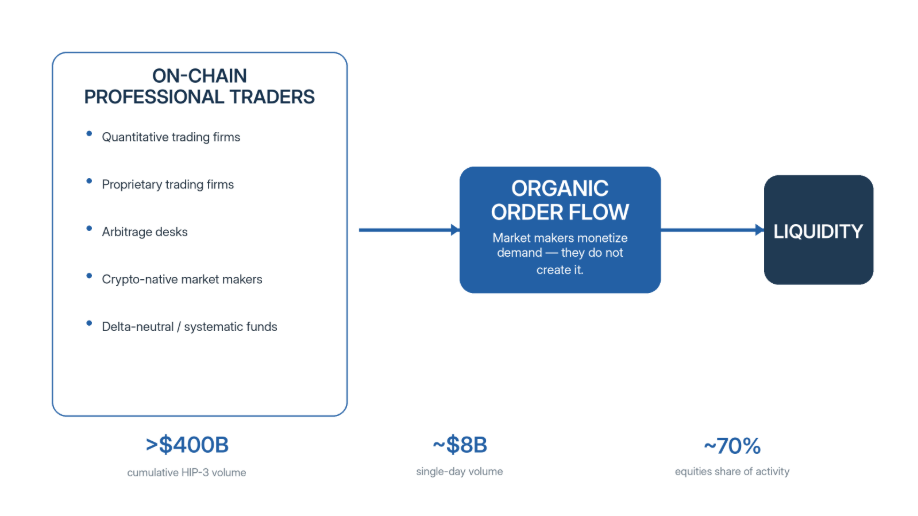
Fig. 2: Organic on-chain order flow creates demand for liquidity.
The Problem On-chain Professional Traders Have Today
Take an example of a crypto-native market maker running an algorithmic strategy trading Nvidia perpetuals on Hyperliquid. They are not simply predicting where the Nvidia stock price goes but also having to manage risks as efficiently as possible. So, how do they hedge?
Today, every hedging option has a drawback:
-
They can hedge with another perp, but now they are hedging one derivative with another derivative, introducing funding-rate risk and basis risk.
-
They can hedge through a traditional broker but now they are dealing with a different infrastructure, different settlement rails, market opening hours and additional operational complexity.
-
Or, simply, they just hold the exposure and accept more inventory risk.
None of these are ideal scenarios, which is exactly why market makers widen spreads. The more expensive and uncertain the hedge becomes, the more expensive liquidity becomes. So, if we can make liquidity more accessible and improve overall market quality, liquidity should attract more liquidity, creating a self-reinforcing cycle.
This Is Where DTCC Tokenized Equities Become Interesting
Now imagine the same crypto-native market maker and nothing about its strategy changes. The only thing that changes is the hedge. Instead of hedging with another synthetic instrument or same asset existing on an entirely different infrastructure, settlement and custody rails, it can hedge using the underlying security itself that exists on the same infrastructure as its perp leg. Not a CFD, not another perp, not a wrapped representation issued by a third-party which fragments liquidity or, worse than the TradFi liquidity, it already has. Instead, it’s rather the actual underlying security, connected to the same legal ownership record already sitting inside the DTCC ecosystem which reduces basis risk and improves hedge quality. It creates a cleaner connection between on-chain trading and the traditional equity market.
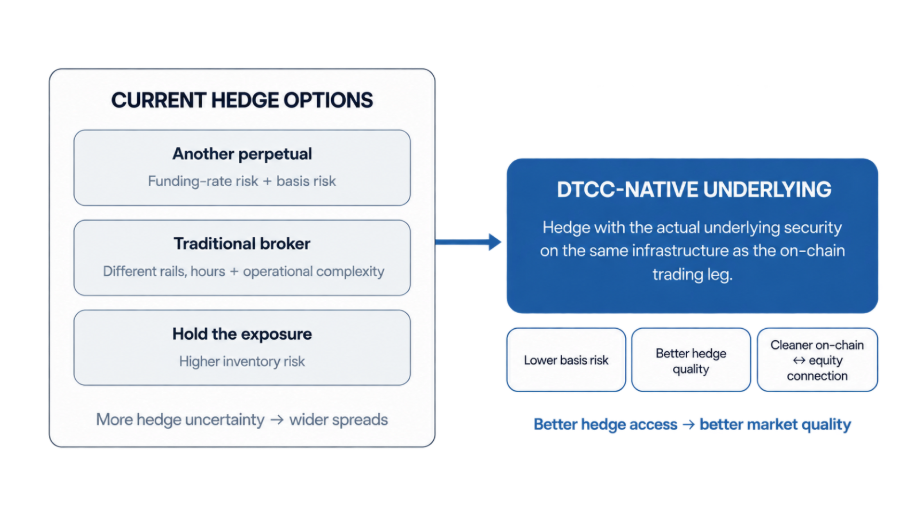
Fig. 3: DTCC-native hedging can reduce risk and operational friction.
To this point, some people might argue that wrapped security entitlement at the DTCC may solve this problem. I don’t think they do though, because wrapped entitlements create another version of the same asset and therefore they also create another liquidity pool where you need to recreate liquidity. Now, instead of one Apple market, you have two; and instead of one inventory, you have a second one. Instead of one source of price discovery, you have two. And instead of leveraging the deepest equity market in the world, you’re asking market makers to bootstrap liquidity in an entirely new market – and from scratch. That’s expensive, is capital inefficient, and it fragments liquidity that is already working extremely well today.
DTCC tokenization is fundamentally different. The objective isn’t to create another market but to extend the existing one onto new settlement rails while remaining connected to the deepest pool of liquidity already available. This opportunity remains open to those that recognize and find a way to take advantage of this solution. That distinction is incredibly important because if you are a market maker you don’t want another isolated inventory pool. You want the same inventory to work harder.
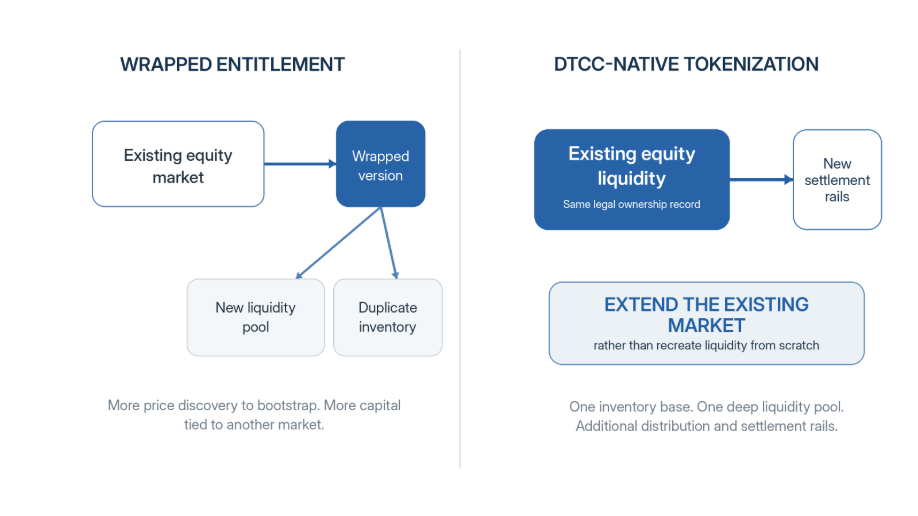
Fig. 4: Native tokenization extends liquidity instead of fragmenting it.
Why are TradFi Market Makers Likely to Have an Edge?
The first successful DTCC tokenized equity market probably won’t be to the advantage of whoever understands blockchain the best, but rather by whoever can provide liquidity at the lowest cost – and this comes down to economics.
A crypto-native market maker already has an advantage when it comes to wallets, smart contracts and on-chain execution, but that’s only one piece of the puzzle and is straight-forward to solve. The harder part of market making isn’t sending transactions to a blockchain, but everything that happens around it which traditional equity market makers have spent decades building. For those equities, crypto-native market makers don’t yet have:
-
Pricing models for the underlying security
-
Financing inventory
-
Stock borrowing
-
Management of corporate actions
-
Hedging risks
-
Optimized capital
Imagine a TradFi market maker that already makes markets in thousands of US equities. IT already finances inventory, already borrows and lends securities, already hedges continuously across cash equities, ETFs, futures and options. If DTCC-native tokenization allows that same inventory to serve both traditional markets and on-chain markets, something interesting happens. It would not be building another business but rather making an existing balance sheet more productive.
Imagine, the same Apple inventory that can potentially support:
-
Nasdaq flows during US hours
-
DTCC-native tokenized overnight trading
-
Spot vs. on-chain perpetual arbitrage
-
Cross-venue inventory management
-
Securities lending and financing
That’s additional revenue generated from assets already funded, and market makers love that because their business isn’t then just about making money but making more money from the same capital.
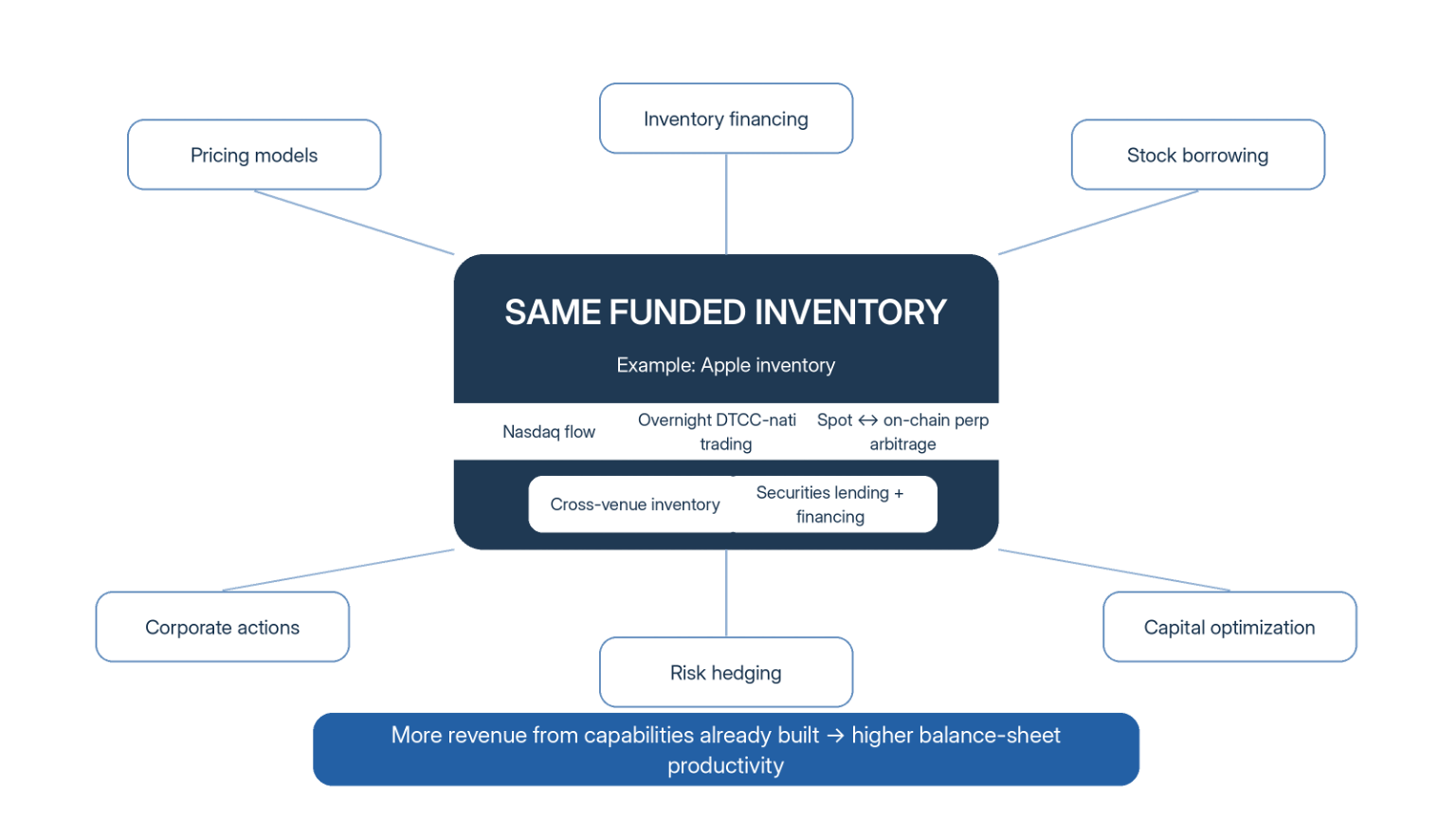
Fig. 5: Existing TradFi capabilities can improve balance-sheet productivity.
Going back to the opportunity cost equation:
𝐼𝑛𝑐𝑟𝑒𝑚𝑒𝑛𝑡𝑎𝑙 𝑅𝑂𝐸=𝐼𝑛𝑐𝑟𝑒𝑚𝑒𝑛𝑡𝑎𝑙 𝑅𝑒𝑣𝑒𝑛𝑢𝑒−𝐼𝑛𝑐𝑟𝑒𝑚𝑒𝑛𝑡𝑎𝑙 𝐶𝑜𝑠𝑡−𝐼𝑛𝑐𝑟𝑒𝑚𝑒𝑛𝑡𝑎𝑙 𝐶𝑎𝑝𝑖𝑡𝑎𝑙
Revenue then increases because there are new on-chain participants that already exist today waiting for a spot market solution and these on-chain participants demand liquidity during new trading hours. There are also new arbitrage opportunities, higher inventory turnover and, potentially, more internalization opportunities.
Costs don’t increase proportionally because TradFi market makers’ pricing model for these instruments already exist, the risk systems for these instruments already exist, the operations team already exists, and the traders already exist.
Incremental capital can remain relatively low because the firm may already finance much of the inventory required.
That’s exactly the type of opportunity market makers look for. Not a completely new business model but an adjacent market that generates a higher return from capabilities in which they’ve already invested billions building. Their success depends on remaining connected to the deepest equity liquidity pool in the world and extending the existing equity market – not creating a second one. Traditional market makers are uniquely positioned to do that because they already sit at the center of today’s market structure and they are essentially just adding another distribution channel.
What’s The Takeaway?
I don’t pretend to have all the answers, and I certainly won’t attempt to lay out a complete market structure in a single article. But I do think we’re asking the wrong questions today.
Too much of the conversation starts with “How do we attract issuers, new product and market makers for these new products?”. Rather, it should start with “Who is the first natural user, what problem are we solving for them, and why does that create an attractive business case for liquidity providers?”
If we can answer those questions, the rest becomes much easier. Market makers don’t need to be convinced to support tokenization. They need to see a market where organic order flow exists and where they can earn an attractive return on capital.
Whether DTCC-native tokenized equities ultimately succeed won’t be determined by blockchain technology alone. It will be determined by whether the market can solve both sides of the equation. By creating genuine demand from institutional users liquidity providers gain a compelling economic reason to commit capital. I think that’s the framework the industry should be building.